Granting Repentance (Acts 11:18)—in Context
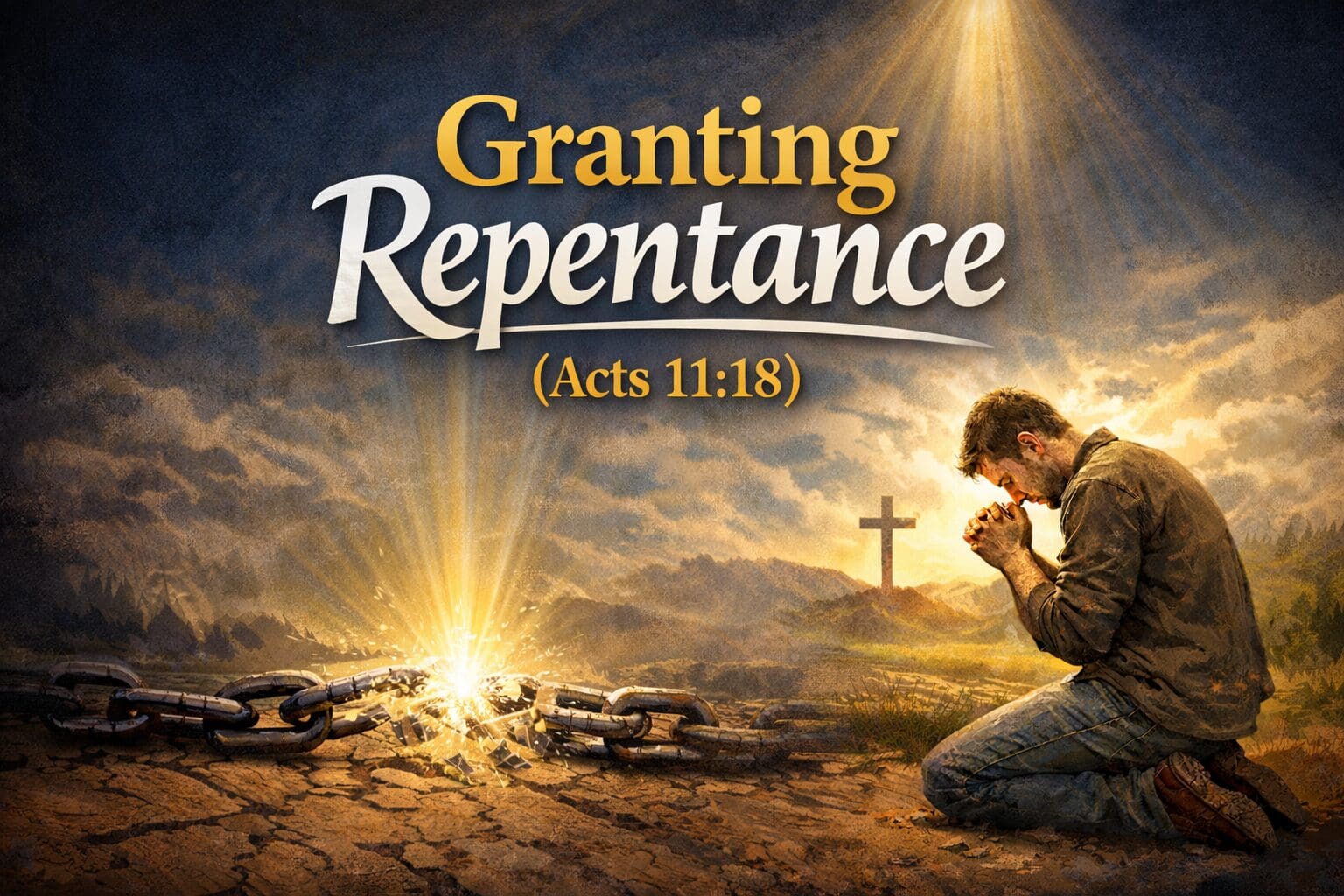
“When they [the Jewish believers] heard these things they became silent; and they glorified God, saying, ‘Then God has also granted to the Gentiles repentance to life’” (Acts 11:18)
Calvinists claim this passage shows that people do not have the ability to repent unless God grants it, which he only does for a select few individuals (the elect). As for the rest of mankind? Well, unfortunately, God did not want these people to be saved, so he did not grant that they repent. As Calvin said, these people were doomed from the womb.
But is this really what Acts 11:18 is teaching?
The Context
Consider the context. In this chapter, Peter is recounting the conversion of the Roman Centurian Cornelius, who is a Gentile.[1] Peter had been summoned by Cornelius to his house after receiving a vision from God. As Peter begins to speak to Cornelius and his household, the Holy Spirit falls upon them, just as it had on the Jewish believers at Pentecost. The room is filled with awe and wonder as Peter witnesses these Gentiles receiving the same gift of the Holy Spirit that the Jewish believers had experienced.
This moment is highly significant as it shows that salvation through Christ is not limited to Jews only, but also Gentiles. The barrier between Jews and Gentiles is broken down, and Peter declares, “Then God has also granted to the Gentiles repentance to life” (Acts 11:18). In other words, God accepts repentance from Gentiles too, just as from Jews.
“This verse highlights the inclusive nature of God’s grace and mercy. It underscores that repentance, the act of turning away from sin and seeking forgiveness, is not limited to a specific group of people [the Jews]. God’s desire is for all people, including the Gentiles, to have the opportunity to experience the transformative power of repentance that ultimately leads to a fulfilled and abundant life. It is a reminder of God’s boundless love and willingness to extend forgiveness and salvation to all who come to Him in genuine repentance.”[2]
God Calls Everyone to Repent
A few chapters later in Acts, Paul is talking with the philosophers in Athens who want to learn about Christianity, and Paul tells them how God had previously overlooked times of spiritual ignorance “but now commands all men everywhere to repent” (Acts 17:30). Why? Because the gospel is now being made known to the Gentiles too.
This call for “all men everywhere to repent” would be an illusion if repentance was something that all people could not do. Furthermore, commanding people to do what is impossible—and then punishing them for not doing it—would be like the Egyptian Pharoah commanding the Hebrews to make brick without providing straw (see Exodus 5). Calvinism turns God into a Pharoah-like tyrant.
When Calvinists assert that people cannot choose to repent unless God grants it—which he only does for a small fraction of humanity (the elect)—Calvinists are also contradicting Peter’s clear teaching that God is “not willing that any should perish but that all should come to repentance” (2 Pet. 3:9). Since God does not want anyone to perish, but wants everyone to repent, then it stands to reason that he would give everyone the capability to repent. To suggest otherwise makes no sense.
Conclusion: For these reasons, the Calvinist interpretation of Acts 11:18 falls short.
By Alex Polyak, Answering Calvinism, 4/9/26
[1] A Gentile is a non-Jew.
[2] Reverand Michael Johnson, “What does Acts 11:18 really mean?,” viewed on GodsBless website, 4/3/26, https://godsbless.ing/commentary/acts/acts_11_18/