The Golden Chain of Redemption (Rom. 8:28-30)—DeCalvinized!
“And we know that all things work together for good to those who love God, to those who are the called according to His purpose. For whom He foreknew, He also predestined to be conformed to the image of His Son, that He might be the firstborn among many brethren. Moreover, whom He predestined, these He also called; whom He called, these He also justified; and whom He justified, these He also glorified” (Rom. 8:28-30).
Calvinists argue this passage shows that God has predestined certain individuals to be saved (and others to be damned). Are they right about this…or are they seriously misinterpreting the passage?
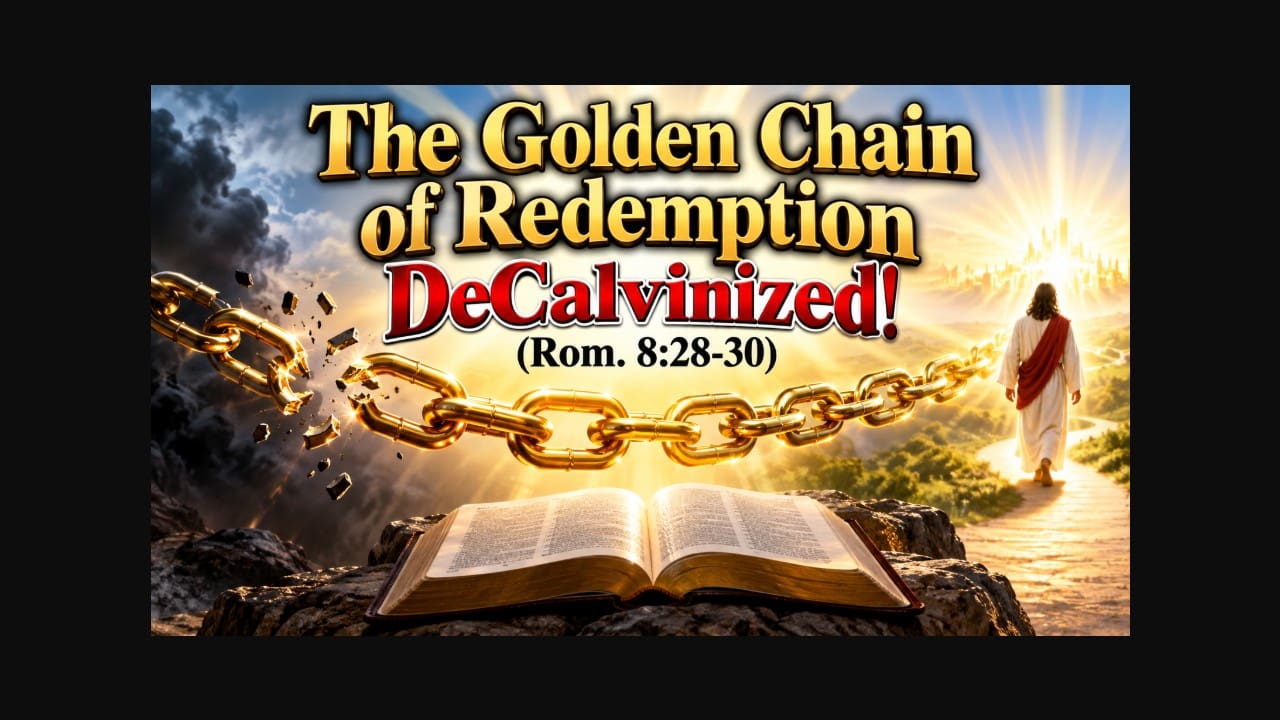
The passage mentions five doctrines—foreknowledge, predestination, calling, justification, and glorification—which are linked together to form the “golden chain of redemption.”
Who is Paul Addressing?
To understand this passage correctly, the reader must first recognize who is being addressed. Paul begins the letter by saying:
“To all who are in Rome, beloved of God, called to be saints” (Rom. 1:7).
Paul is addressing the Christian church in Rome. Anyone in Paul’s day could be part of the church, just like today. And it is to the church Paul uttered the golden chain of redemption.
The Links in the Chain
Paul prefaces the “golden chain” with the famous passage:
“And we know that all things work together for good to those who love God, to those who are the called according to His purpose” (Rom. 8:28).
This passage assures those who love God—the church—that no matter what happens in this life, God will make all things work out for our good in the end. Note: Jesus defines loving God as “keeping his commands” (see John 14:15).
Paul then mentions the first link in the golden chain, foreknowledge, which means “to know beforehand.” In this case, God foreknew he would redeem the church. This was God’s plan from the beginning! So if someone chooses to be part of the church, he or she is part of the group God foreknew he would redeem.
The second link is predestination, which means “to destine beforehand.” In this case, God predestined that the church would be redeemed. So if someone chooses to be part to the church, he or she is part of the group God predestined to save.
The next link in the chain is God’s calling. God has called the church—those who love God—to himself to be redeemed.
The fourth link is justification, which is the act of God declaring or making one righteous. In this case, God has justified the members of the church.
Finally, the fifth link in the golden chain is glorification, which means the church is perfected, freed from sin, and shares in the eternal glory of God. This is the fate of everyone choosing to be in the church.
Conclusion
Nothing in the passage suggests God predestined certain individuals to be saved and others to be damned (as Calvinists teach). Paul is not addressing particular individuals; he’s addressing the church, which is a fluid body, ebbing and flowing as people join and leave. If someone chooses to be part of the church, then he or she is part of the group that God foreknew, predestined, called, justified, and glorified. But if someone rejects the church—and does not repent—then he or she will perish (John 3:16).
This is what God has sovereignly decreed to happen!
By Alex Polyak, Answering Calvinism, 9/6/26.